
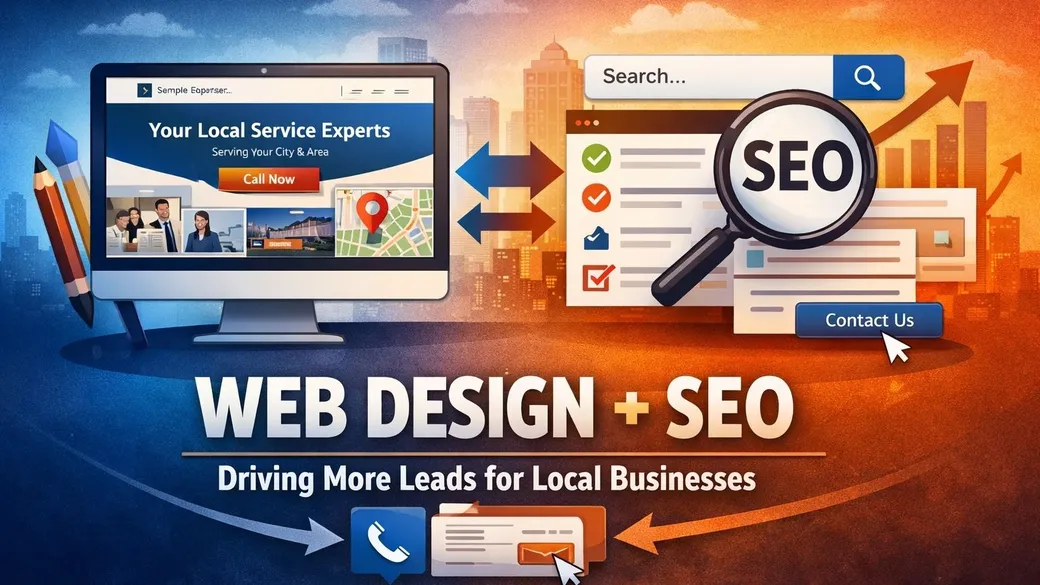
SEO Brings Traffic. Web Design Turns That Traffic Into Leads.
SEO is responsible for getting your website in front of potential customers when they search for services you offer.
Web design determines what happens after they land on your site.
If your site is slow, confusing, cluttered, or outdated, visitors leave. Rankings alone do not generate revenue. Conversions do.
A strong local website is built to support both search visibility and user action.
Clean Web Design Supports Higher Conversion Rates
Clean web design is not about being flashy. It is about clarity.
High converting local business websites share a few key traits:
- Clear headlines that explain what you do and where you do it
- Simple navigation that makes it easy to find services
- Prominent call to action buttons
- Mobile friendly layouts
- Fast load times
Design should guide the user’s attention, not distract it. Every page should make it obvious who the site is for, what problem you solve, and how to contact you.
SEO brings visitors in. Clean design helps turn them into calls and form submissions.
Design Should Support SEO Content, Not Fight It
One of the biggest mistakes we see is web design that works against SEO content.
Local SEO requires text. It requires service descriptions, location context, and clear explanations of what you offer. When design hides text behind tabs, sliders, or animations, search engines and users both suffer.
Good design supports content by:
- Making text easy to read
- Using proper heading structure
- Allowing space for service explanations
- Highlighting important sections instead of burying them
A website does not need to be text heavy, but the text that exists must be visible, readable, and useful.
Photos and Videos Are SEO Assets When Used Correctly
Photos and videos are not just design elements. They are local SEO assets.
Real photos help establish trust and prove that your business is legitimate and local. Videos help explain services and keep users engaged longer.
A well designed website makes space for:
- Real job site photos
- Team photos
- Office or storefront images
- Short service videos
- Before and after galleries
Design should enhance these assets, not shrink them or hide them.
When photos and videos are properly integrated into page layouts, they improve engagement and support local relevance signals for search engines.
Establishing Local Relevance Through Design and Content
Local SEO is about proving to search engines and users that you serve a specific area.
Your website design should reinforce that at every level.
This includes:
- Location references in headings and body text
- City and service area mentions placed naturally
- Embedded maps on contact pages
- Location specific photos
- Clear service area descriptions
A well structured design allows local content to be presented naturally without feeling forced. This helps both rankings and conversions.
Website Structure Matters for SEO and User Experience
Website structure is where SEO and design truly intersect.
A good structure:
- Makes it easy for users to find information
- Helps search engines understand page relationships
- Supports scalable growth as you add services or locations
Key structural elements include:
- Logical navigation menus
- Dedicated service pages
- Clear internal linking
- Simple page hierarchies
Designing structure first and decorating later leads to better SEO performance and a smoother user experience.
Page Speed Is Both a Design and SEO Issue
Slow websites lose conversions.
Heavy design elements, uncompressed images, unnecessary scripts, and bloated themes all hurt performance.
Clean design choices lead to:
- Faster load times
- Better mobile performance
- Lower bounce rates
Don’t lose your hard earned traffic just because your website loads slowly.
Branding That Helps You Stand Out in Crowded Local Markets
Most local service websites look the same. Same layouts. Same stock photos. Same generic messaging.
Strong branding helps you stand out.
Your website should reflect:
- Your personality
- Your professionalism
- What makes your business different
This does not mean sacrificing clarity for creativity. It means using design intentionally to support your brand and reinforce trust.
A recognizable brand improves recall, builds credibility, and increases conversion rates over time.
SEO Without Good Design Caps Your Growth
You can rank without good design. Many businesses do.
But growth stalls when traffic does not convert.
SEO without conversion focused design leads to wasted opportunity. Design without SEO leads to beautiful websites no one sees.
The strongest local business websites treat SEO and design as two parts of the same system.
Location-Specific Design Considerations
Website design should consider the area you are targeting when it comes to your core audience. When we build websites for our Tucson SEO clients, we focus on a site structure that supports rankings across the greater Tucson area.
Messaging and copywriting is tailored to the needs of Tucson customers in order to both improve local rankings and speak to our target audience.
Ranking businesses in Tucson with local SEO comes down to planning ahead starting with your website build out.
Choosing the Right Web Designer
Finding a web designer that understands the branding side of web design and the structure required to support SEO can be a challenge.
While SEO involves much more than just web design, if your designer does not understand the core fundamentals of SEO, you will struggle to implement the items required to ensure your website has the best setup for ranking on search engines.
At Fire Fuel SEO, we’ve partnered with Creatography to build and rank websites on many projects, so if you are looking for a skilled high-end web designer in the Tucson area, we recommend checking them out.
Final Thoughts: Build Websites That Rank and Convert
Web design and SEO are not separate checkboxes. They are complementary strategies that work best together.
A clean, conversion focused design supports SEO content, highlights photos and videos, reinforces local relevance, and showcases your brand in a way that stands out from competitors.
If your website is not ranking or not converting, the issue is often not SEO or design alone. It is how they work together.
If you want a website that is built to rank, convert, and grow with your business, Fire Fuel SEO helps Tucson businesses design and optimize sites that do all three.